Showing posts with label Yakima. Show all posts

Saturday, January 18, 2014

MV-22 Stop-over


 An MV-22 Osprey from VMM-161, the "Greyhawks" out of Miramar, California, stopped by the Yakima airport a couple days ago(?).  Apparently there was some sort of equipment casualty and a part was trucked from Spokane to Yakima to repair it.

 As a matter of luck I discovered its presence.  I took the daughter and drove over to see it.


As a further matter of luck, I discovered from some passersby that it was scheduled to leave at 1pm.  We got there about noon.  So, we grabbed a bite to eat and then came back to tail gate!

About twenty minute before one, they started the APU, which was remarkable loud, then, after that had stabilized, about ten minutes later they began start up procedures.  That blue smoke is from the APU start if I remember right.
 After they got it going, you could tell the crew chief unplugged his mike and ran over to the rapidly multiplying crowd.  He pointed to a couple of kids next to the fence, which, the mother said, freaked them out, then he handed them each a squadron patch.  If I had a little less decorum, I would have rushed the fence and begged for one, too.
They ran the engines up once to a towering crescendo and then dropped the throttles again.  Then finally, with the entire crew, which, if my count was correct, was five, the crew door forward was closed, throttles ran up again and breaks released and it moved out.

It rotated outside of my vision.  I was hoping for more of a vertical lift off, but alas it was not to be.

Still, for a Saturday afternoon around here, it was great excitement!!

Tuesday, July 23, 2013

KC-130J Hercules, from Futenma, Japan

Today, at about 3pm local, a Marine KC-130J, landed at the Yakima Airport.  Apparently to load some para-jumpers.  At about 4:15pm, it took off again.  This aircraft was accepted by the Marine Corps in October 2001.  Its tail code suggests that its usual base is MCAS Futenma, on the island of Okinawa, Japan.  


You can tell it is a KC(the K denoting a tanker, and the C denoting Cargo...don't ask me why K stands for Tanker, it just DOES.) by the drogue-bearing auxiliary tanks under the wings.  The Marine Corps likes to have birds that can perform several functions.  These birds can refuel any aircraft outfitted with a probe.  The US Air Force prefers to use the Boeing-developed Flying Boom method, in which a specially trained boom operator guides the refueling nozzle into a receptacle on the receiving aircraft.  The Navy uses the probe and drogue system like the Marines.  Given rivalries between the services, it seems fair to say that the Marine and the Navy pilots would argue that the boom method is for sissies, since you practically have someone refuel your aircraft for you, while the Air Force pilots might argue that you have to maintain a higher degree of exact flying to stay within the small box that the boomer can refuel in.  Both methods get the job done, though, and I pass no judgement either way.


Without having spoken to to the pilots, one can only surmise why this bird is so far from home.  Likely explanations include depot level overhaul, training, or just run-of-the-mill-that's-what-they-do-all-the-time.    
 Well, that's all that's going on in my little corner of Washington State, how about yours?


Sunday, May 10, 2009

F-104C #57-912, May 10, 1963


(the F-104D at McClellan Aviation Museum, now Aerospace Museum of California)


On May 10, 1963, (46 years ago today) Captain Victor J. O'Bryan strapped on an F-104C Starfighter for a Napalm and Strafe mission at the Yakima Firing Center. O'Bryan was part of a vast aerial armada that had been moved to the central part of Washington State for Exercise Coulee Crest. This exercise was designed to test the smooth cooperation of the different service branches. Captain O'Bryan was part of the 479th Tacticl Fighter Wing, and the 435th Tactical Fighter Squadron from George AFB. His aircraft would not last the day.

The mission was to rendezvous with an F-100F over the range in Central Washington and have the flight photographed on it's firing passes which would be coordinated by a Forward Air Controller (FAC). Weather was 4000 scattered, high thin scattered, visibilty was 15 miles and the temperature was 60 F. The wind was five miles an hour. The flight consisted of 4 F-104C Starfighters, made by Lockheed for the Tactical Air Command. O'Bryan was the number three man.


Why a thoroughbred fighter plane like the F-104 should be forced to carry bombs and troll around in the mud is beyond me. The F-104 did one thing very well. It went very fast. It was tiny. The cockpit is not far above the ground, in a pinch you could probably get into the cockpit without the benefit of a ladder. It was about 54 feet long with a miniscule wingspan of only 21 feet. Those wings had sharp edges and had special covers so ground crews would not injur themselves while walking around the plane (See photo below). It was difficult to find in the sky and it was very fast. It had one very powerful engine, the J-79, also used on the F-4 Phantom. The C model of the F-104 had a new model of the J-79, its diameter was three inches bigger, giving it about 1000 more pounds of thrust. However, "The F-104C had a number of operational problems with various components. The major offender was the J79-GE-7 engine--forty serious mishaps occurred over a five-year period, destroying 24 aircraft and killing 9 pilots. This led to Project Seven Up, a General Electric modification program for the engine which began in May of 1963 and ended in June of 1964. "* Still, the F-104 could deliver its small payload with devestating accuracy according to most sources.


The flight's call sign was Ritzy. The preflight had stressed safety procedures concerning the armament. The report states that the armorer noted nothing out of the ordinairy during the arming of the gun. Even another pilot from the flight had checked his gun door and felt that it was secure.

The flight took off at 1005 PDT and proceeded to the target area where they contacted Friend X-ray, their FAC. The F-100, call sign Boil 64, joined the formation on the wing of number four at this time. The FAC directed the flight to the target, 55 gallon drums and cardboard troop cut outs. The flight dropped its napalm on the first pass. They then went around for a gunnery pass. O'Bryan did not fire on the first pass because of the smoke from the napalm. At this time, Boil 64 lost his position on the number four aircraft and formed up on O'Bryan's wing for his second strafing pass. At about 2500 feet from the target, O'Bryan opened fire. He had only fired about 100 rounds when he felt a jolt in the aircraft and heard a grinding noise as the gun stopped firing.

O'Bryan interpreted this as a gun jam and initiated a pull up at 100% power when Boil 64 told him a part of his aircraft had just come off. O'Bryan asked him to check out his aircraft and left his power at 100%. Boil 64 indicated that O'Bryan's gunbay door was missing. There was also a hole at the bottom rear of the gun compartment, at this time, O'Bryan began to notice the engine running rugged. His instruments read 700 degrees EGT (Exhaust Gas Temperature), 70% RPM. The aircraft peaked out of the climb at 6000 feet and 240KIAS (Knots Indicated Air Speed) and began a gentle descent. O'Bryan attempted a low-altitude stall clearing procedure. While he was doing this Boil 64 could not slow down enough to stay with him. The procedure worked and RPM increased to 90%, but then the engine stalled again, but more violently than before. His altitude was 4000 and O'Bryan decided it was best to leave the aircraft. He leveled out at 200KIAS. His radio had not come back on line after the stall clearing procedure.

He jettisoned the canopy, and ejected successfully. Pilot and seat separated, but the automatic chute opening system malfunctioned and he had to pull the manual lanyard. He landed safely and was picked up by helicopter within a half hour. The aircraft impacted approximately 14 miles NE of Yakima, Washington. The price of the aircraft is listed as $1,478,402.00.
.
It would appear from the report that there was an explosion of gun exhaust gas, which compromised the gun bay door. It would appear, also, that parts from this explosion were possibly ingested by the engine, which caused the stall. Given the F-104's poor slow speed handling and the fact that it had the glide angle of a brick with wings, it was probably a good idea to depart the aircraft.
below are pictures of the engine. It appears to have wrapped itself up.


here is a map of the crash area.

Wednesday, May 21, 2008

Exercise Coulee Crest

This is a request to the vast numbers of blog readers: Please ask your friends, grandparents, uncles, and anyone else: “What do you know about Exercise Coulee Crest?”

This is what I know: It was a large exercise concerning USSTRICOM, or United States Strike Command. It happened in Washington State, and involved the transport of military personnel from other parts of the United States. Douglass C-133 Cargomasters and C-124 Globemaster IIs were used in the transport of troops and equipment. It happened during April and May of 1963. I also know there was an army aircraft, which I assume was a helicopter, that crashed about 8 miles North of Ellensburg Washington after striking a power line while it was conducting reconnaissance for Exercise Coulee Crest.

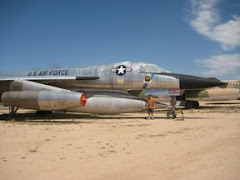
I also know that a few first hand witnesses have described to me personally a large exercise that involved the military “capturing” the city of Moxee. They recall large movements of men and material. They usually date it to the late 1950s or early 1960s. Descriptions usually involve army jeeps armed with machine guns sitting on the corners of the town of Moxee. Yet Another witness described camps on the south side of the ridge, and noted that 2 1/2 ton trucks would pull up to the store and buy all the beer on hand. One of the witnesses also stated that Air Force aircraft also made a showing. His description seemed to indicate a Douglas A-1 Skyraider. There is a picture of an EB-66 at Larson AFB supposedly participating in the exercise, see below.

Here are my questions: Did the C-133s land in Yakima, at Larson, or McChord? What about the C-124s? How many troops were involved? Where are the photos of this operation? Where is the helicopter that went down? I am sure there are others questions that I might think of later. Does anyone out there know about this operation?