
Tuesday, November 23, 2010
Geiger Tigers, Back Story!!


Sunday, November 14, 2010
Heartfelt Request
I am requesting, if you live in Washington, that you comment on this post with any and all aviation related items that are not any longer associated with aviation. For instance, I posted, about a month ago, about the J-57 engine can that was being used as a water tank. There are other instances, however, of such things as drop-tanks being used as signs. In Oregon, there is a B-17 that is sitting above a gas station. There is an F-101 Voodoo on a stick near Tacoma. There is a wing of a B-24 on Mission Ridge near Wenatchee, Washignton. There is a drop tank that sits on a pole near Zillah, Washington. Someone used a drop tank to make a model airplane outside of a shop in Moses Lake, Washington. There is another type of drop tank that sits outside a farmer's shop near Moxee, Washington. I, myself, have a drop tank hanging from the ceiling of my shed. I would like to try and create a general map of aviation artifacts in this state. Since I can't take the time to canvass the the state, I am hoping my slim readership will help. Eventually the results will be posted here on this site! Your help is deeply appreciated!
Sunday, October 31, 2010
Geiger Tigers, the 498th FIS
The 498th Fighter Interceptor Squadron operated out of Spokane's Geiger Field. These are two parts to a tongue-in-cheek documentary of their participation in a gunnery competition (William Tell maybe?)of some kind at Yuma, Arizona. It does not show much in the way of Geiger Field, but it is worthwhile in it's 1950's humor and view into the lighter side of Air Defense Command personnel.
Also, you get to see the folding fin Mighty Mouse rockets in action.
Also, you get to see the folding fin Mighty Mouse rockets in action.
Sunday, October 17, 2010
P-38H-5LO #42-66778
On the morning of November 10, 1943, Second Lieutenant Richard G. Simpson, of the 331st fighter squadron at Ellensburg Army Air Field, readied himself for a local flight to practice high altitude acrobatics. While he was filing his paperwork and getting ready for his flight, Second Lieutenant M. F. McFarland brought his P-38H in for landing. McFarland handed the aircraft over to Staff Sergeant Miller on the flight line who probably refueled it and readied for its next flight. Simpson, finished with the appropriate paperwork and suited up for flight stepped out and did his pre-flight signing for the air craft. Sergeant Miller probably watched him taxi out before turning to his next charge.
Simpson went to the end of the runway, received clearance and gunned the throttles. He left the ground at 11:35am, local time. After leaving field, he climbed east to 32,000 feet. He leveled out and spent ten minutes making turns. At this time, he decided to roll the plane over and dive straight down. He looked at his air speed, it “was about 300 MPH.” He tried to take it out of the dive, but he had no control. He tried several different methods, from trim tabs to gunning the engine. Nothing worked. As the ground rushed toward him, he realized he needed to exit the aircraft. He released the canopy and put his head and shoulders into the slipstream. The onrushing air pulled him out, but he was knocked unconscious.
He came to as he fell to the ground. He could not move his hand to pull his ripcord, but the wind action had pulled his chute partially open, and then it fully opened, though some of the shrouds were broken. He floated down and hit the sage brush hard. He hit the ground at about 12:30pm. After about an hour and-a-half he found a road then a ranger who took the downed pilot to his cabin and fed him soup and coffee until the ambulance picked him up.
Once he left P-38H #42-66778, Simpson floated to the ground for a comparatively gentle landing, living to fly another day. However, 66778 did not meet a similar fate. It rocketed toward the ground. Some have suggested it broke up in flight, which would be supported by the evidence on the ground today. This aircraft’s wreckage is strewn from near the summit of the hill, down to about 400-500 feet below the summit. Some of the largest pieces were toward the bottom. There appeared to be no impact crater.
Given the P-38’s tendency to be a fast machine, it was one of the first aircraft that introduced aero-engineers and pilots to the phenomenon of compressability. When the airframe reached speeds near 500 miles per hour, the nose would tuck under and the pilot would loose control. From Simpson’s testimony, this is what apparently happened to 66778, though 300 MPH seems a bit low for that to happen. Due to the aerodynamic forces in play and the P-38’s high lift wing, it seems entirely possible that the airplane broke up in flight.
Craig Gyselinck discovered #42-66778’s crash site in 2003. He described it as being scattered over one square mile. He also described finding live ammunition. He was a high school student at the time. There was an article on this in the Ellensburg Daily Record, which you can find here.
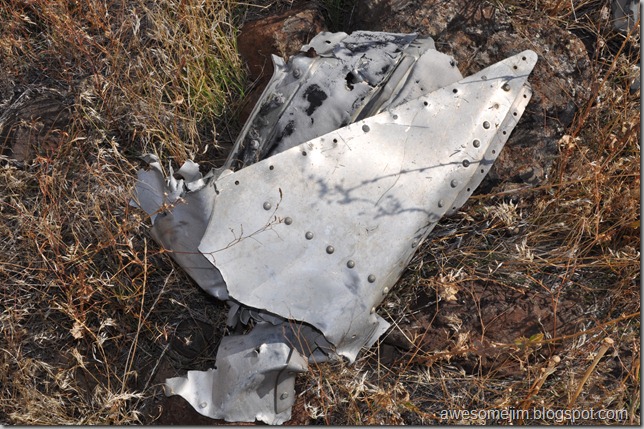
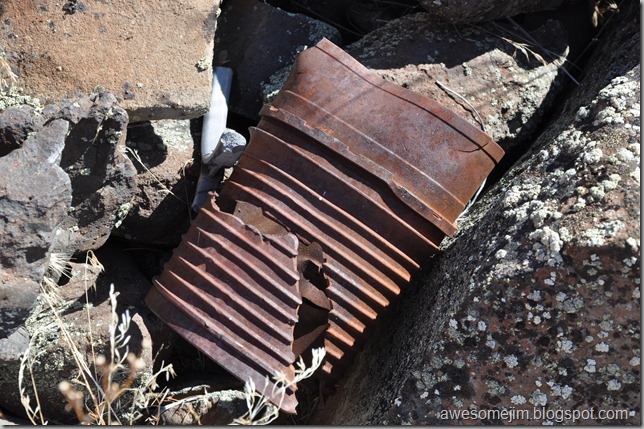
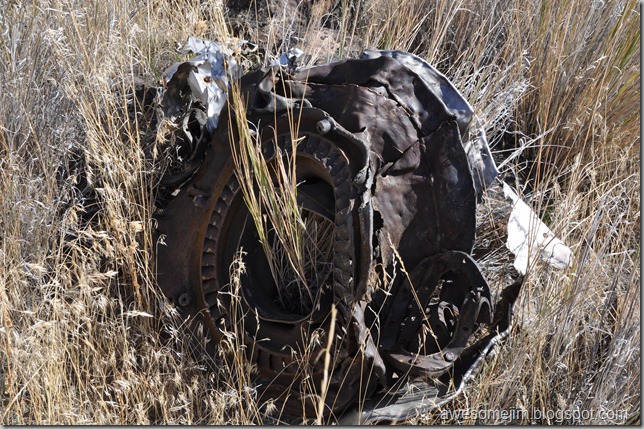
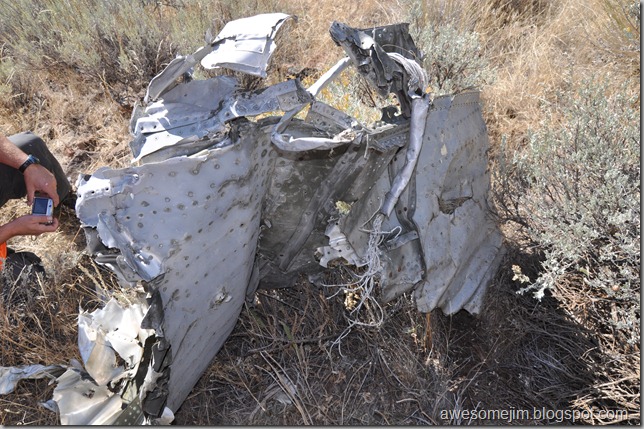
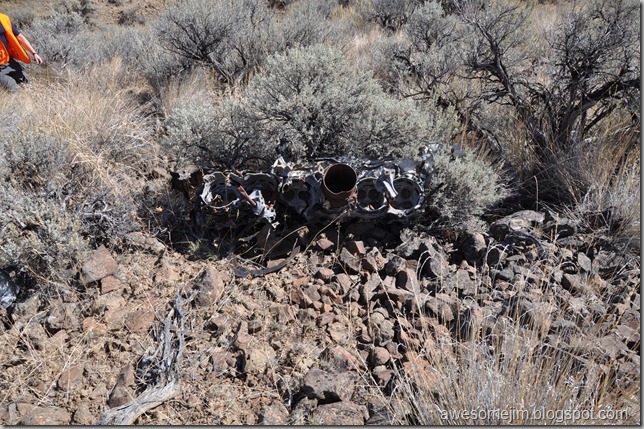
On October 16, 2010, I accompanied Mr. Gene Gould to the site of #42-66778. We found bright aluminum and even a little stainless steel shining in the sun across a gully from us. In the course of investigating the debris we found several items of interest. Among them, part of one of the turbo-superchargers, and a head and valve cover from one of the Allisons. The photos below will tell a more complete story of our visit.

It doesn’t look at steep as it felt…trust me, my aching muscles are telling me it was nearly a vertical hill!

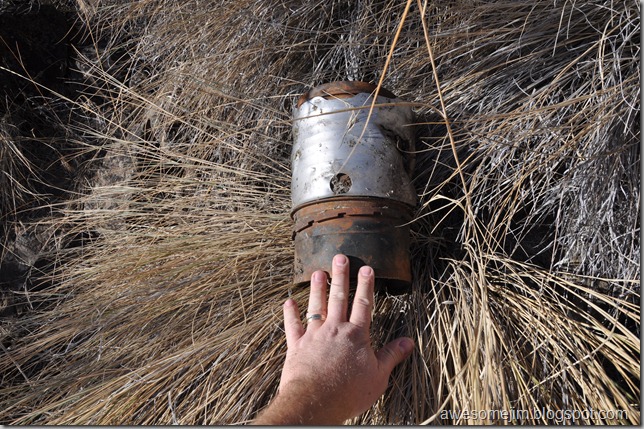
Above is the cylinder housing from the engine. Below is the exhaust manifold.


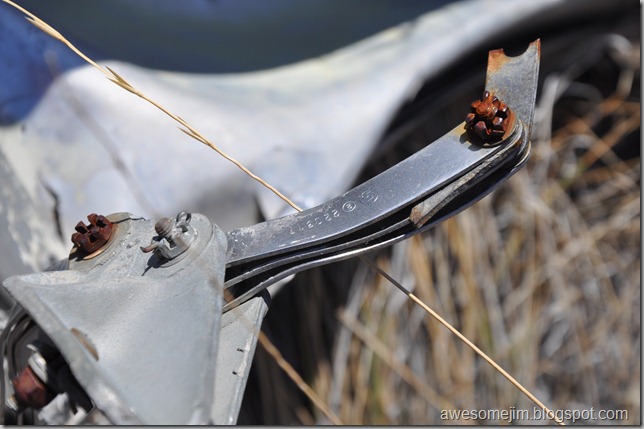
One of the prefixes for P-38 parts is 19, this confirms it.


Above is some sort of flapper allowing air flow, one suspects cooling air for one of the engines, but I don’t know for sure. Below is one of the turbo-superchargers. The patterns seem to indicate it was still turning when it hit.


Part numbers.




Above is part of a radio.
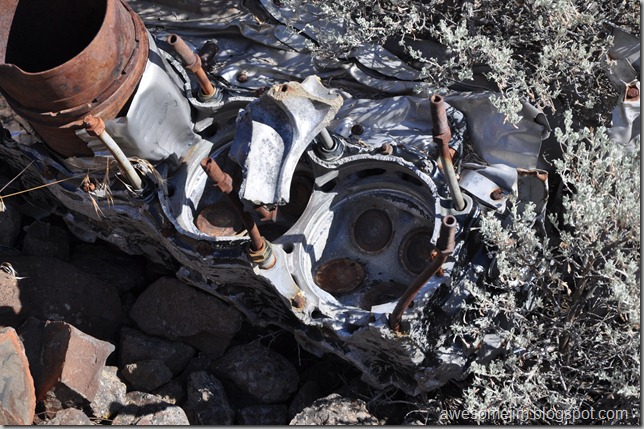
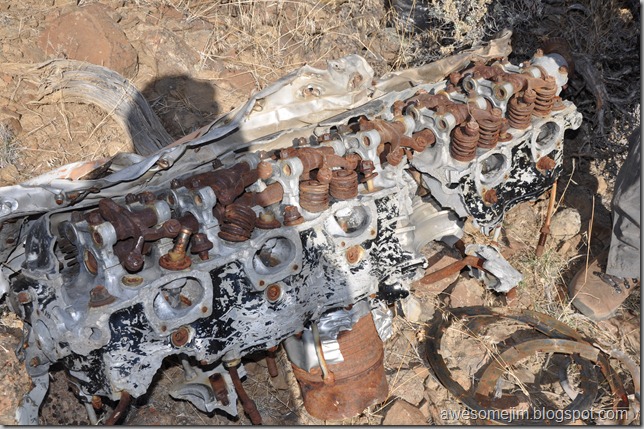
This head from an Allison V-1710 shows the difference between engines in cars and those meant for flight.



We found pieces with this desert pink and OTHERS with olive drab.



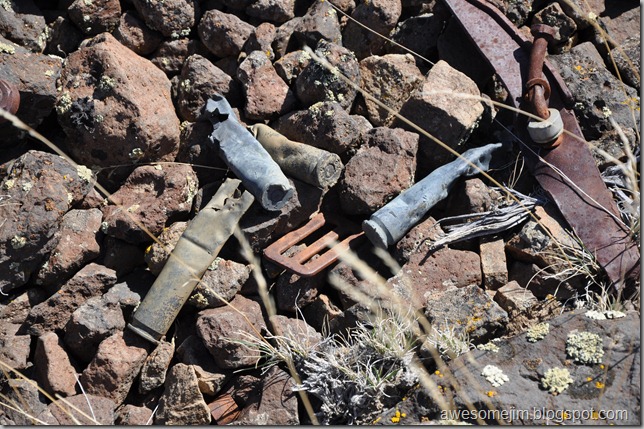
Below are a few shells. The primers were not fired, so one COULD say this was live ammunition.

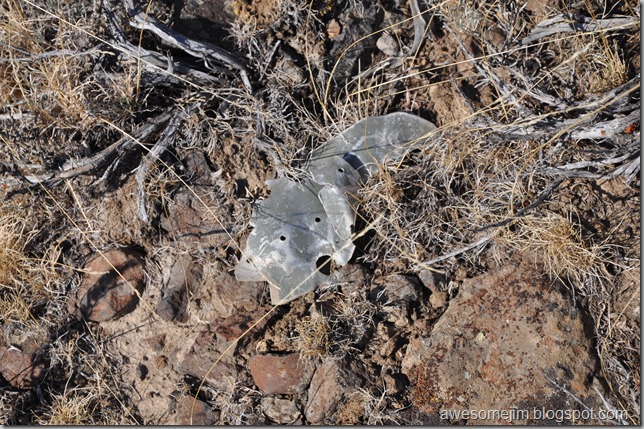

As with my first wreck, I am amazed by the small size and great scattering of the pieces of this aircraft. That the larger items we found we toward the bottom of the hill would suggest that there may be more there. We got to a point where we were thirsty and well below our back packs, so we headed back up slope. It was well worth the effort. It was a very interesting crash site!
sources:
USAF accident report for #42-66778
Ellensburg Daily Record, December 27, 2003, http://news.google.com/newspapers?id=pWYpAAAAIBAJ&sjid=l8cEAAAAIBAJ&dq=ellensburg%20fighter%20crash&pg=3443%2C7373466
Simpson went to the end of the runway, received clearance and gunned the throttles. He left the ground at 11:35am, local time. After leaving field, he climbed east to 32,000 feet. He leveled out and spent ten minutes making turns. At this time, he decided to roll the plane over and dive straight down. He looked at his air speed, it “was about 300 MPH.” He tried to take it out of the dive, but he had no control. He tried several different methods, from trim tabs to gunning the engine. Nothing worked. As the ground rushed toward him, he realized he needed to exit the aircraft. He released the canopy and put his head and shoulders into the slipstream. The onrushing air pulled him out, but he was knocked unconscious.
He came to as he fell to the ground. He could not move his hand to pull his ripcord, but the wind action had pulled his chute partially open, and then it fully opened, though some of the shrouds were broken. He floated down and hit the sage brush hard. He hit the ground at about 12:30pm. After about an hour and-a-half he found a road then a ranger who took the downed pilot to his cabin and fed him soup and coffee until the ambulance picked him up.
Once he left P-38H #42-66778, Simpson floated to the ground for a comparatively gentle landing, living to fly another day. However, 66778 did not meet a similar fate. It rocketed toward the ground. Some have suggested it broke up in flight, which would be supported by the evidence on the ground today. This aircraft’s wreckage is strewn from near the summit of the hill, down to about 400-500 feet below the summit. Some of the largest pieces were toward the bottom. There appeared to be no impact crater.
Given the P-38’s tendency to be a fast machine, it was one of the first aircraft that introduced aero-engineers and pilots to the phenomenon of compressability. When the airframe reached speeds near 500 miles per hour, the nose would tuck under and the pilot would loose control. From Simpson’s testimony, this is what apparently happened to 66778, though 300 MPH seems a bit low for that to happen. Due to the aerodynamic forces in play and the P-38’s high lift wing, it seems entirely possible that the airplane broke up in flight.
Craig Gyselinck discovered #42-66778’s crash site in 2003. He described it as being scattered over one square mile. He also described finding live ammunition. He was a high school student at the time. There was an article on this in the Ellensburg Daily Record, which you can find here.
On October 16, 2010, I accompanied Mr. Gene Gould to the site of #42-66778. We found bright aluminum and even a little stainless steel shining in the sun across a gully from us. In the course of investigating the debris we found several items of interest. Among them, part of one of the turbo-superchargers, and a head and valve cover from one of the Allisons. The photos below will tell a more complete story of our visit.

It doesn’t look at steep as it felt…trust me, my aching muscles are telling me it was nearly a vertical hill!


Above is the cylinder housing from the engine. Below is the exhaust manifold.


One of the prefixes for P-38 parts is 19, this confirms it.


Above is some sort of flapper allowing air flow, one suspects cooling air for one of the engines, but I don’t know for sure. Below is one of the turbo-superchargers. The patterns seem to indicate it was still turning when it hit.


Part numbers.


Above is part of a radio.


This head from an Allison V-1710 shows the difference between engines in cars and those meant for flight.


We found pieces with this desert pink and OTHERS with olive drab.


Below are a few shells. The primers were not fired, so one COULD say this was live ammunition.


As with my first wreck, I am amazed by the small size and great scattering of the pieces of this aircraft. That the larger items we found we toward the bottom of the hill would suggest that there may be more there. We got to a point where we were thirsty and well below our back packs, so we headed back up slope. It was well worth the effort. It was a very interesting crash site!
sources:
USAF accident report for #42-66778
Ellensburg Daily Record, December 27, 2003, http://news.google.com/newspapers?id=pWYpAAAAIBAJ&sjid=l8cEAAAAIBAJ&dq=ellensburg%20fighter%20crash&pg=3443%2C7373466
Sunday, September 19, 2010
Up In The Hills
You never know where you’re going to find aviation history. Sometimes it is sitting out for all the world to see, but no one sees it because it is just so obvious. Take this for instance. This is out in the hills south of Satus, Washington. I happened to be out for a drive and had decided to turn around and go back. I glanced at this twice. At one point my glance wandered across the “J57” and it occurred to me that there was a jet engine called that. When I looked back, I saw this! Well, obviously, I had to stop and take photos.
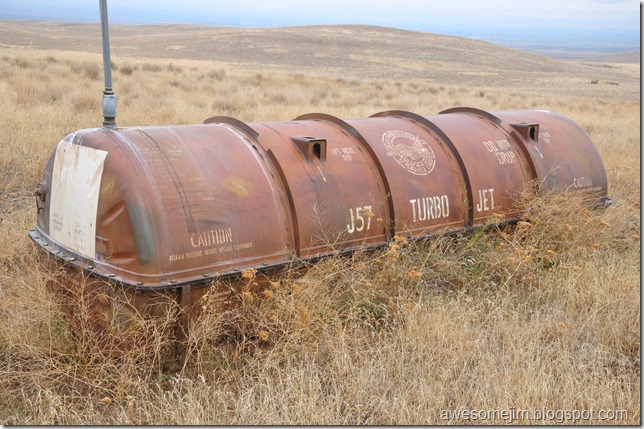
The J-57 was a turboje t engine that powered many of the USAF’s 1950s jets, and some of the Navy’s. They were manufactured from 1951 to 1965, with over 21,000 built! The B-52 was originally powered by the J-57, as were the F-100, the F-102, the Navy’s F-8 and F4D. It was a widely used engine. And this is evidence of it’s existence.

These “cans” are what they used to transport the engines in. They were obviously water-proof, especially, since this is being used for water storage.

So, keep your eyes open, things like this are out there in the open. You just need to recognize them!

Have you seen something in Washington State that just screams aviation history to you? Drop me a line about where it is, and if you send me a photo, I’ll post it here!

The J-57 was a turboje
t engine that powered many of the USAF’s 1950s jets, and some of the Navy’s. They were manufactured from 1951 to 1965, with over 21,000 built! The B-52 was originally powered by the J-57, as were the F-100, the F-102, the Navy’s F-8 and F4D. It was a widely used engine. And this is evidence of it’s existence.
These “cans” are what they used to transport the engines in. They were obviously water-proof, especially, since this is being used for water storage.

So, keep your eyes open, things like this are out there in the open. You just need to recognize them!

Have you seen something in Washington State that just screams aviation history to you? Drop me a line about where it is, and if you send me a photo, I’ll post it here!
Tuesday, September 7, 2010
USS Olympia
Do you remember reading about the Spanish-American War? Remember the Maine? Well, the USS Maine is gone. Sunk. But, Admiral Dewey’s ship remains. FOR NOW.

The USS Olympia is in dire straits. Launched in 1892, she is the oldest floating steel warship. She is the ONLY surviving ship that fought in the Spanish-American War!! This old warship is in need of repairs and a dry-docking, though. She has been on display for the public, but may sink in her moorings if something is not done soon.
Please donate to her cause! Even a small amount will help. I donated this afternoon when I read the article. This was not the first time I have read of her distress, but this is the day I made the decision to help! It was not much, but it was what I could spare. Please! We must keep this historic ship afloat! We let the USS Washington die under the cutting torch, will we let the USS Olympia wither away like an unwanted shoe?
You can read more about the USS Olympia here.
For the sake of your children, help her.
You can donate here. You can spread the word on Facebook here.
The USS Olympia
is in dire straits. Launched in 1892, she is the oldest floating steel warship. She is the ONLY surviving ship that fought in the Spanish-American War!! This old warship is in need of repairs and a dry-docking, though. She has been on display for the public, but may sink in her moorings if something is not done soon. Please donate to her cause! Even a small amount will help. I donated this afternoon when I read the article. This was not the first time I have read of her distress, but this is the day I made the decision to help! It was not much, but it was what I could spare. Please! We must keep this historic ship afloat! We let the USS Washington die under the cutting torch, will we let the USS Olympia wither away like an unwanted shoe?
You can read more about the USS Olympia here.
For the sake of your children, help her.
You can donate here. You can spread the word on Facebook here.
Subscribe to:
Posts (Atom)




 Posts
Posts


